


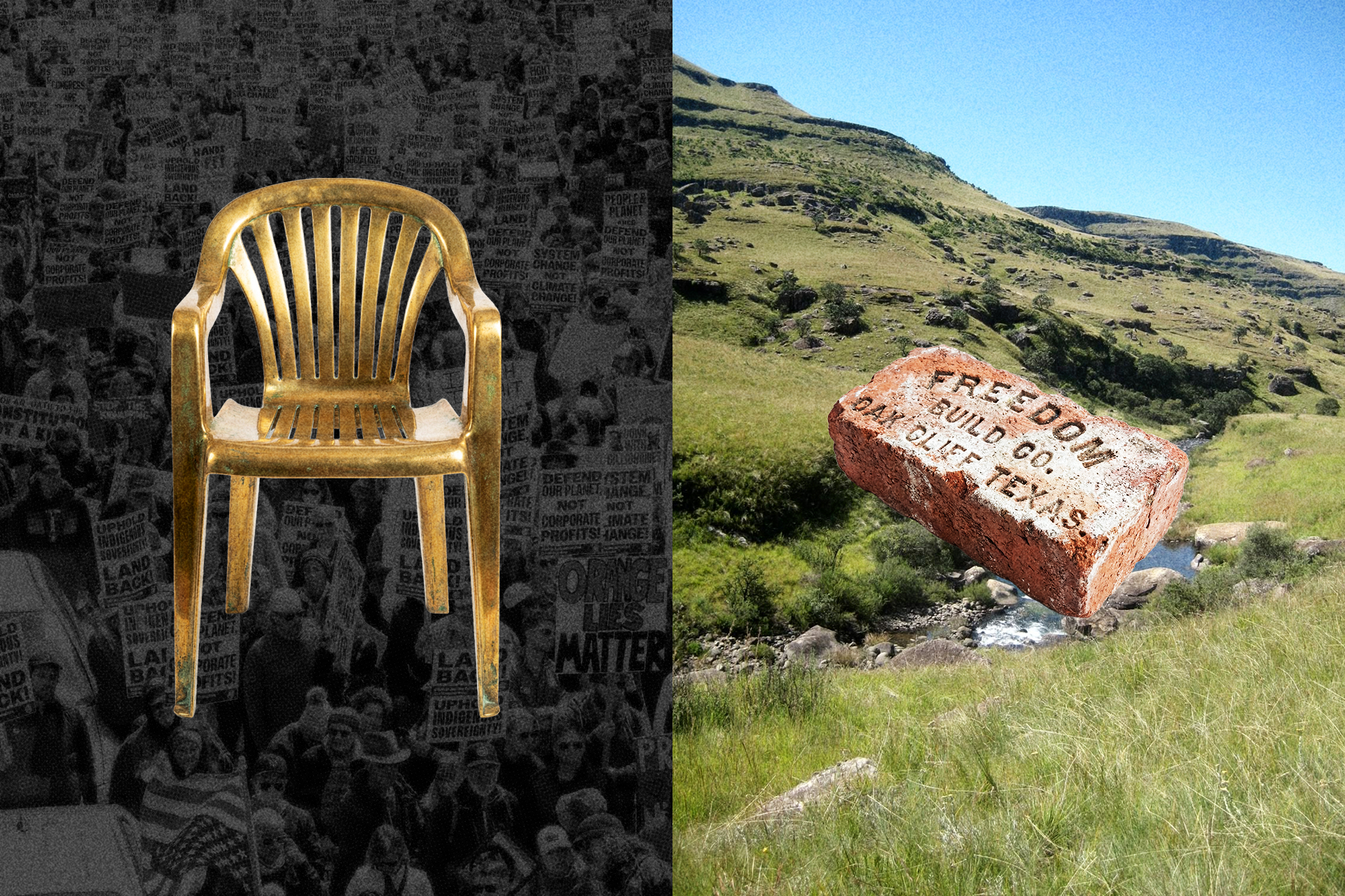
Freedom Must Be Material
If someone is talking about freedom and it isn’t material, they’re playing in your face. Freedom is not a feeling. It is not something you march for and wait to be handed back to you.
Freedom is autonomy.
Autonomy over what feeds you. Autonomy over what heals you. Autonomy over what educates you. Autonomy over what employs you. Autonomy over what informs you. Autonomy over what governs you. Freedom is the ability to shape your lived experience without begging broken systems to behave.
This was made plain in 1984 when Neely Fuller Jr. laid out the blueprint: oppression operates as a system — coordinated, structured, maintained. Not random. Not accidental. And an uncomfortable part of his analysis was our participation in perpetuating it.
If the architecture of domination is systemic, our counter must be structural.
Progress is not enough. Symbolism will not save us. Infrastructure built by a radical Black imagination just might.
The Institutions Are Exhausted
We were handed a dream we have never actually seen. The America our grandparents believed in — stable, upward, secure — is not the one we inherited.
This is not random chaos. It is structural transition — what we explored in our Fourth Turning piece — a cyclical moment when old institutions strain, legitimacy erodes and new systems are forced into being.
The institutions we were told would carry us are visibly buckling:
• Education no longer guarantees mobility — it guarantees debt
• Medical systems do not produce equal outcomes — especially for us
• Food is engineered for profit, not nourishment
• Media manipulates attention more than it informs
• Labor has historically been leverage and now automation and AI are rewriting that leverage in real time.
These systems are not simply corrupted. They are exhausted.
Exhaustion at scale creates rupture.
Rupture is dangerous.
Rupture is also an opening.
When institutions weaken, the possibility and necessity of autonomy expands.
Systems Survive on Our Participation
Here is the uncomfortable truth.
Systems do not float above us. They are fed by us.
And here is where the cognitive dissonance lives.
We will say without hesitation that the criminal justice system does not serve us. We will critique policing. We will critique sentencing. We will critique incarceration.
But then we walk into hospitals almost reflexively — compliant, uncritical, conditioned by fear and unfamiliarity. We fill our carts without questioning whether the “food” is even food. We deposit money assuming protection. We send our children into school systems assuming they are being educated, not conditioned.
We recognize bias in one arm of the machine and suspend that recognition in the others. Our conditioning makes it difficult to accept that the same machinery that glamorizes criminality could profit from mass incarceration. That a system could engineer sickness and then monetize the cure.
We were trained to compartmentalize the harm — to believe corruption is isolated instead of systemic.
But a machine does not grow a conscience just because we move to a different department.
Every structure we complain about runs on four inputs:
• Our labor
• Our consumption
• Our belief
• Our permission
Without those, they stall.
Many of the systems that disadvantage us require our participation to survive. They need our bodies, our dollars, our attention, our compliance.
We participate not because we are foolish, but because we were trained to.
We were taught how to navigate systems. How to outperform inside them. How to survive them. We were taught to be patient inside them.
And when patience failed, we were taught to fight them.
Navigate or resist. Endure or protest.
Both responses keep the system at the center.
What we were rarely taught is that participation itself is leverage.
Labor has always been leverage. Boycotts, strikes, work stoppages — history proves that when labor withdraws, systems feel it.
Consumption is leverage. Attention is leverage. Belief is leverage.
And leverage means choice.
No one told us that we could opt out. That we could withhold our labor. Redirect our dollars. Refuse to legitimize what exploits us. Build parallel structures and slowly starve what does not serve us.
Withdrawal is not weakness.
Withdrawal is strategy.
And strategy begins with imagination.
Radical Imagination Is a Design Discipline
Freedom in this era requires radical imagination.
Not reforming what is collapsing.
Not nostalgically patching what was extractive from the start.
But re‑designing each domain of life around values that actually sustain us.
That begins with interrogation.
Who told us success meant proximity to institutions that barely tolerate us? Who sold us hyper‑individualism as strength while we forgot we are a communal people? Why did we trade wellbeing for productivity, ownership for consumption, stability for prestige?
Institutions are fracturing because they were built on extraction — growth without reciprocity, scale without soul. When the values rot, the structure cracks. Leaving failing systems becomes easier the moment we stop revering the values that built them.
That is fundamental divestment.
To be real, divestment costs and freedom ain’t free. The price is comfort, convenience and proximity to prestige. It may cost income, approval, even belonging. Not everyone is willing to pay that price.
Some prefer the predictability of captivity to the responsibility of autonomy. Some are comfortable being fed by the system — even if it means, eventually, being food for it.
Radical imagination is not for the passive. It is for those willing to endure temporary instability in exchange for long‑term sovereignty.
If that feels heavy, it’s because it is. Freedom is not a theory to debate. It is a line you either cross or you don’t.
Crossing that line forces us to examine the defaults we treat as non‑negotiable.
If public schools are graduating children who cannot read fluently and preparing them for a labor market automation is already dismantling, why are we pretending that model is viable? Radical imagination means training our children to build the world we want to inhabit.
If a staggering percentage of women end up with unplanned C‑sections, and Black women continue to face disproportionate maternal mortality, why is the hospital (where 98% of us give birth) the unquestioned default for low risk births? Radical imagination resets our standards for maternal care.
If the highest office in the land is occupied by a convicted felon, why are we still treating legislation as our primary path to remedy?
Radical imagination asks a dangerous question: what if the default is not destiny? What if we are allowed to replace what does not love us back?
Everything — Including Borders — Is on the Table
Vote with your time. Vote with your attention. Vote with your dollar. Vote with your feet — and your passport.
Borders are political decisions, not destiny.
Where you live determines what you can access, what you must endure and how hard you have to fight for baseline dignity.
Geography shapes legal protections, capital access, safety, mobility.
In moments of structural fracture, relocation is not betrayal. It is leverage.
Radical imagination refuses inherited limits.
Everything — including borders — is on the table.
Autonomy Requires Cooperation
Individualism will not carry us through structural collapse. Autonomy at scale requires cooperation.
Group economics is not a slogan — it is survival math.
When institutions wobble, collective infrastructure becomes the stabilizer: cooperative ownership, pooled capital, shared land, community governance. Not charity. Not vibes. Structure.
And now labor — the engine that powered capitalism for centuries — is being destabilized in real time by automation and AI.
If labor is entering crisis and the dollar itself feels unstable, wages can no longer be our primary strategy for security.
Mass uprisings are not the strategy. This moment does not require millions moving in perfect sync. It requires small, high‑trust groups working with clarity, discipline and repeatable frameworks.
Where We Have Leverage Now
This post opens a series.
Over the next installments, we move from rhetoric to construction — focusing on the systems where we actually have leverage.
Not the ones that require permission from the state.
Not the ones that demand mass mobilization.
The ones where small, disciplined groups can withdraw and build immediately.
We begin with five pressure points.
1. Media & Information
Easiest to exit. Highest psychological leverage. We can redirect attention today. Own platforms. Control narrative. Starve distortion.
2. Education
The credential monopoly is weakening. Pods, apprenticeships, skill networks — we can redesign how we prepare the next generation without waiting for institutional reform.
3. Food & Health (Preventative)
Daily consumption is a vote. Buying clubs, local sourcing, maternal autonomy, preventative care — partial sovereignty is available now.
4. Labor & Ownership
Labor has always been leverage. Now that automation is destabilizing wages, equity, cooperatives and shared enterprise become non‑negotiable.
5. Housing & Geography
Harder, but transformative. Land, co‑living, strategic relocation. Where you live determines how much you must struggle for baseline dignity.
These are not theoretical domains. They are leverage points.
In each piece, we will ask:
Where are we captured?
Where is our leverage?
What can we withdraw from?
What can we build instead?
Freedom will not be solved in theory.
It will be constructed — system by system.
This is the Work Ahead
We do not need permission to reimagine our lives. We need alignment, leverage and the courage to withdraw where necessary.
The systems are shifting. The only question is whether we will drift with them — or build something sturdier while they do.
Freedom belongs to the builders.