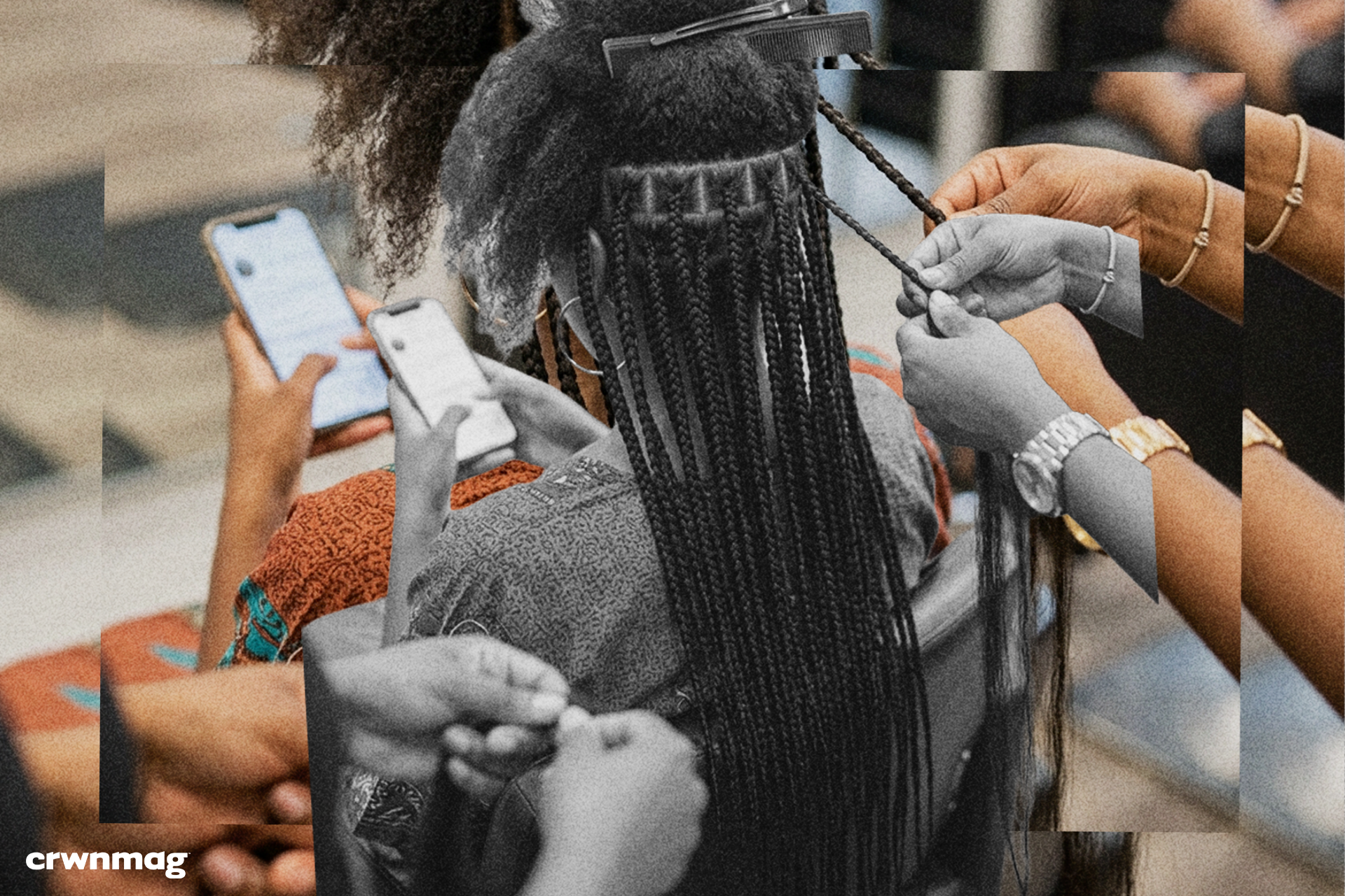
The first time I recognized love was in Alima African Hair Braiding.
It was there that I witnessed womanhood — but most importantly, mothers mothering each other.
The smell of Pink Lotion and Blue Magic.
The singing of blow dryers and flat irons.
The harmony of children running between chairs.
Mothers sharing stories.
Nollywood movies playing in the background.
Everyone eating a meal of their choosing. Women entrepreneurs stepping into the shop to pitch their businesses, pulling out notebooks to record who bought a dress, jewelry or a plate of food.
Mothers would come in with all the money they had budgeted for their children to be beautified.
Sometimes neglecting themselves. Sometimes bargaining for themselves.
And of course, one of the aunties would say, “Let me give you two braids. It’s okay.”
This piece is part of Our Mothers Are Many, our series exploring the expansive nature of motherhood — how we are nurtured by villages, mothered beyond biology…and how we mother ourselves and our communities in manners both visible and unseen.
Have a story to tell? We’re accepting pitches for this series. To be considered for publication Submit here.
The family would be bundled.
As she sat for those two braids, she would begin to explain herself. Why she couldn’t afford more. Why she came in late. How she was struggling to learn to do her children’s hair on her own.
They let each other in.
They wept together.
They laughed together.
The shop was where they unwrapped themselves and allowed themselves to be seen.
Unknowingly — or knowingly — these mothers were mothering each other.
Staci once came into the shop after dark and asked for braids so she could secure her wigs. But she demanded it be done in the bathroom. She didn’t want anyone to see that she was experiencing extreme hair loss — alopecia.
She cried.
One of the aunties agreed but told her gently, “Hold your head up. We all come here to look better. No one is here to judge.”
To share the moment, another aunt removed her own wig and showed Staci she was not alone.
After that, whenever Staci returned, she went straight to that aunt. They would have the shop to themselves — in their own universe.
The shop was where all the children belonged to all the mothers.
Where mothers and mothers-to-be became sisters.
Where little girls who once came in for cornrows with beads now return with their own children for knotless braids.
It was where a frustrated customer once asked to speak to the manager, and every aunt turned in unison and said, “We’re all the manager and owner of this establishment.”




this was so beautifully done. i relate so much to feeling at home and taken care of in braiding shops; it's such a unique and incredible feeling.