


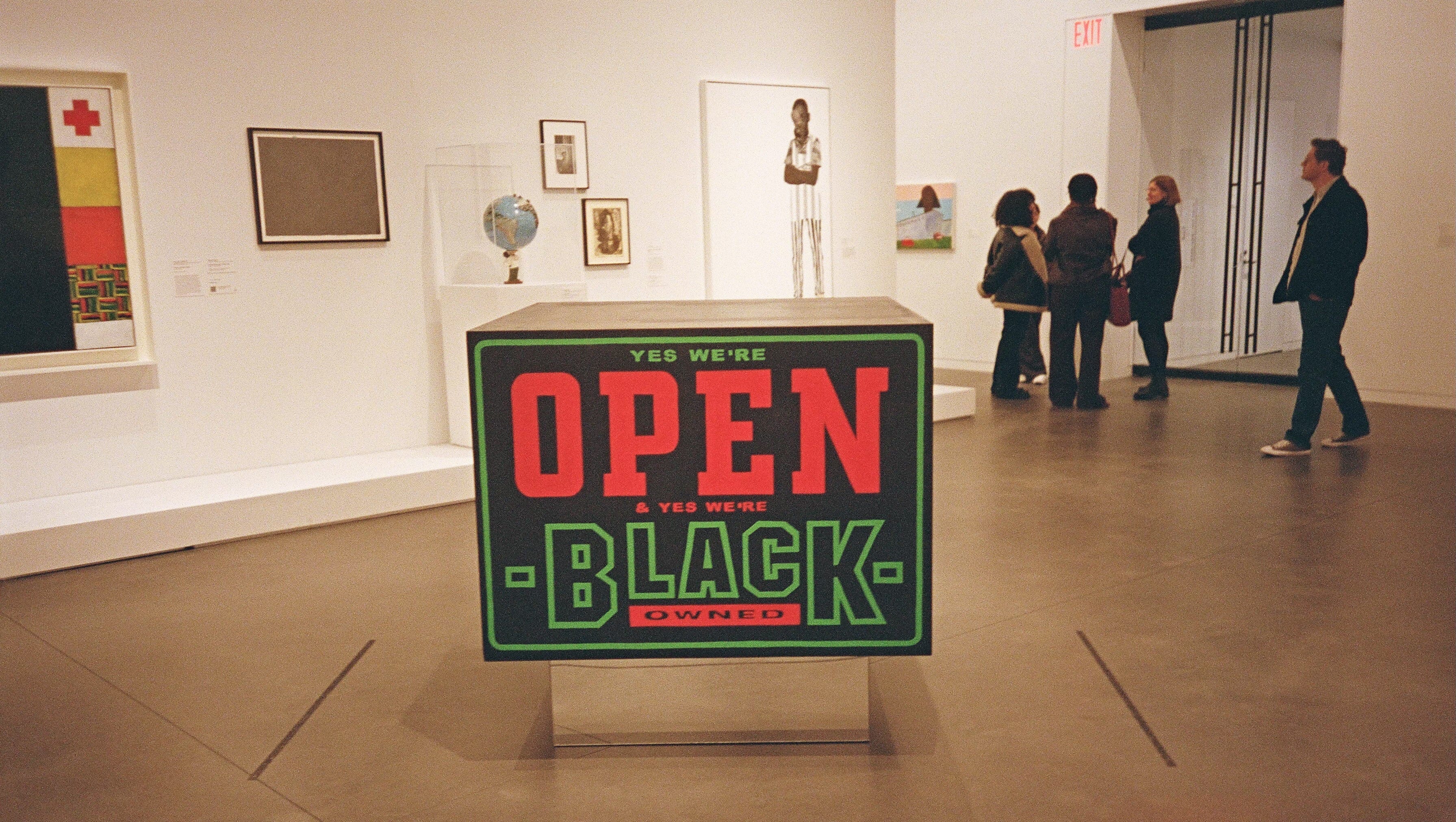
On a recent visit to the new (and spectacular!) Studio Museum in Harlem, I picked up an essay collection titled BLACK ART NOTES. Published in 1971, it was an early proclamation of what Black artists wanted Black art to be outside of the constraints of a white-dominated art world and society. Art FUBU, in a nutshell. The collection was edited by Tom Lloyd, an artist and organizer whose experimental light sculptures inaugurated the Studio Museum’s first exhibition in 1968 and are featured now as part of the museum’s stunning relaunch. It is a beautiful full circle moment, and I was curious to see what he and his peers were thinking over fifty years ago. I’ve been looking to the past a lot these days. Partly to hunt for clues that might light our way through this darkness, and partly to remind myself that none of this shit is new. I’m rarely disappointed by what I find.
In one of the essays, “The Role We Want for Black Art,” by artist and AFRICOBRA co-founder, Jeff Donaldson, he says the following about the role of Black art:
“Art or knowledge that does not serve the cause of the Black struggle is a waste of valuable time and creative energy. Black artists and Black scholars who do not respond positively to the cause of Black mental and physical liberation will be considered irrelevant by their grandchildren.”
WHEW! A word. Jeff, we are on the same page! Over my many years of producing art projects and trying to discern my own practice, I have gotten the chance to see many, many shows and exhibitions and studio visits. I’d be lying if I said there haven’t been times I’ve looked at something and said…why need this be? Lol. There is surely a place for art that has no obvious connection to current events, but in times of extreme turmoil and strife, I personally gravitate toward artists who are saying something urgent in the most honest and compelling way possible. Energy is finite, and when the stakes presented are our very lives, my priority is to find others who are concerned with the truth of our Black humanity and how that clarity can lead to us thriving, no matter what.
I have been energized recently by many shows where Black artists are taking this charge seriously and are showcasing beautiful work that also has a lot to say about who WE are, where we’ve been and where we may go from here. In this post I’ll talk about two (one that just finished and one that is up until the Spring), but I’ll add in others of note you should check out at the end.
Kerry James Marshall, The Histories at the Royal Academy of London.
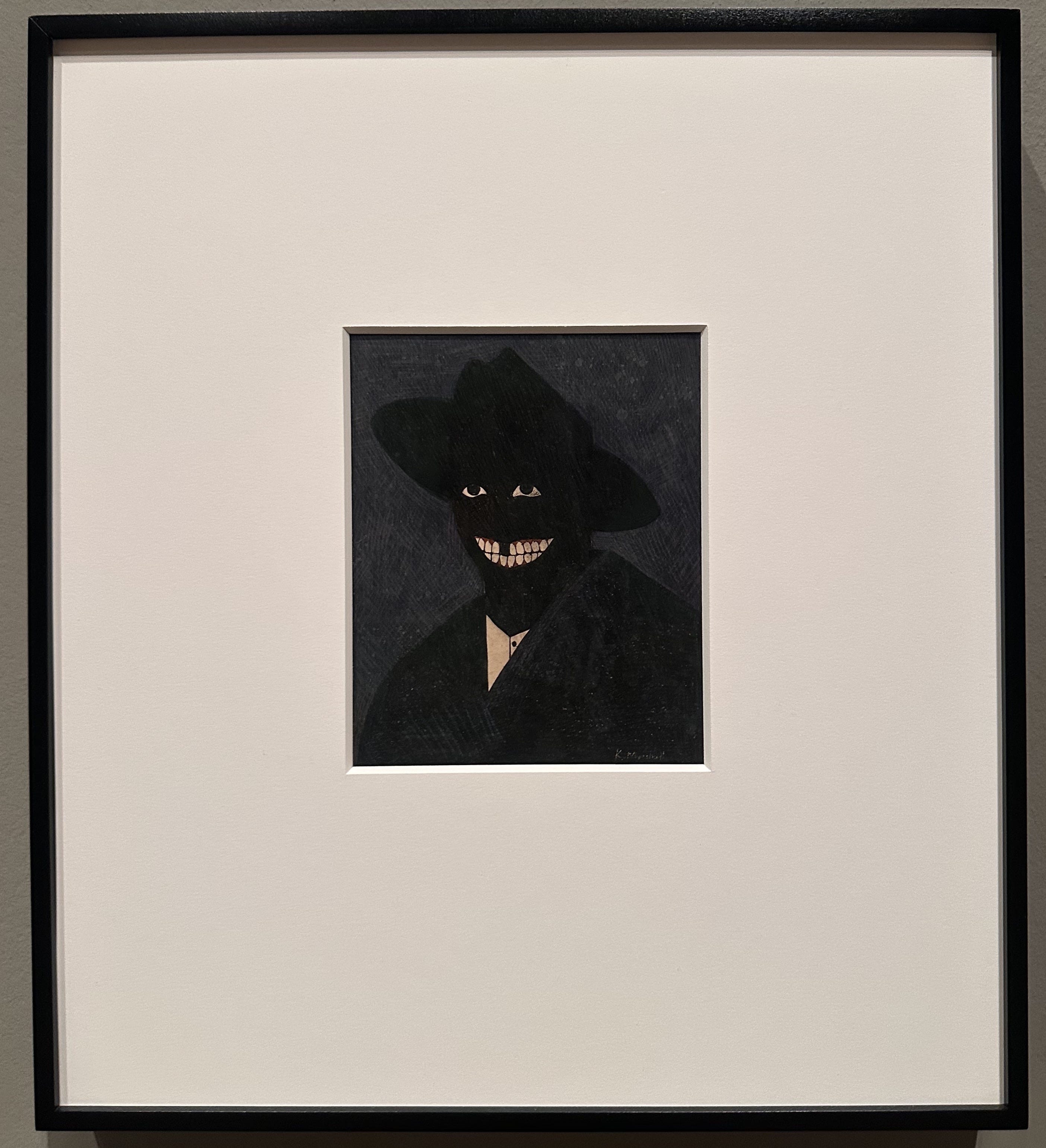
Without a doubt, Kerry James Marshall is one of the world’s most technically-proficient painters. His technique is undeniable, as is evidenced by his use of various Black pigments to depict Black people. This itself a brilliant and bold artistic choice.
He is also a brilliant examiner of our society, and is not afraid of tackling some of the biggest and most complex periods of our history and the absence (or inclusion) of Black bodies in its artistic record. While familiar with his work, I had never been to a Kerry James Marshall exhibition, so when I heard that his biggest European showcase ever was happening at the Royal Academy, I managed to get to London right before it closed last month.


It was phenomenal. The Histories is a massive show taking up eleven galleries with themes that range from epochal periods like the Middle Passage and the Civil Rights Movement to how Blackness is represented (or not) in the western Art Canon, to an intimate scene of a couple lying in bed (rendered all in black), to beautifully rendered scenes within a Black barbershop or a Black beauty school. Most of the works are large scale and many are unframed hanging from the wall like in progress studio works. In a space as grand as the Royal Academy, which historically would have been one of the main perpetrators of anti-Blackness or at least Black omission, seeing this show is profound for some, disorienting for others. It was definitely one of those situations where most of the people were older and white (British!), and I prayed no one tried to make conversation with me.


There was a beautiful room of paintings with collage that depicted salons and family rooms focusing on memorializing important cultural and political figures that was very moving. It felt like a glimpse into a room in your grandmother’s house you’re not allowed to sit in, and it was mesmerizing.
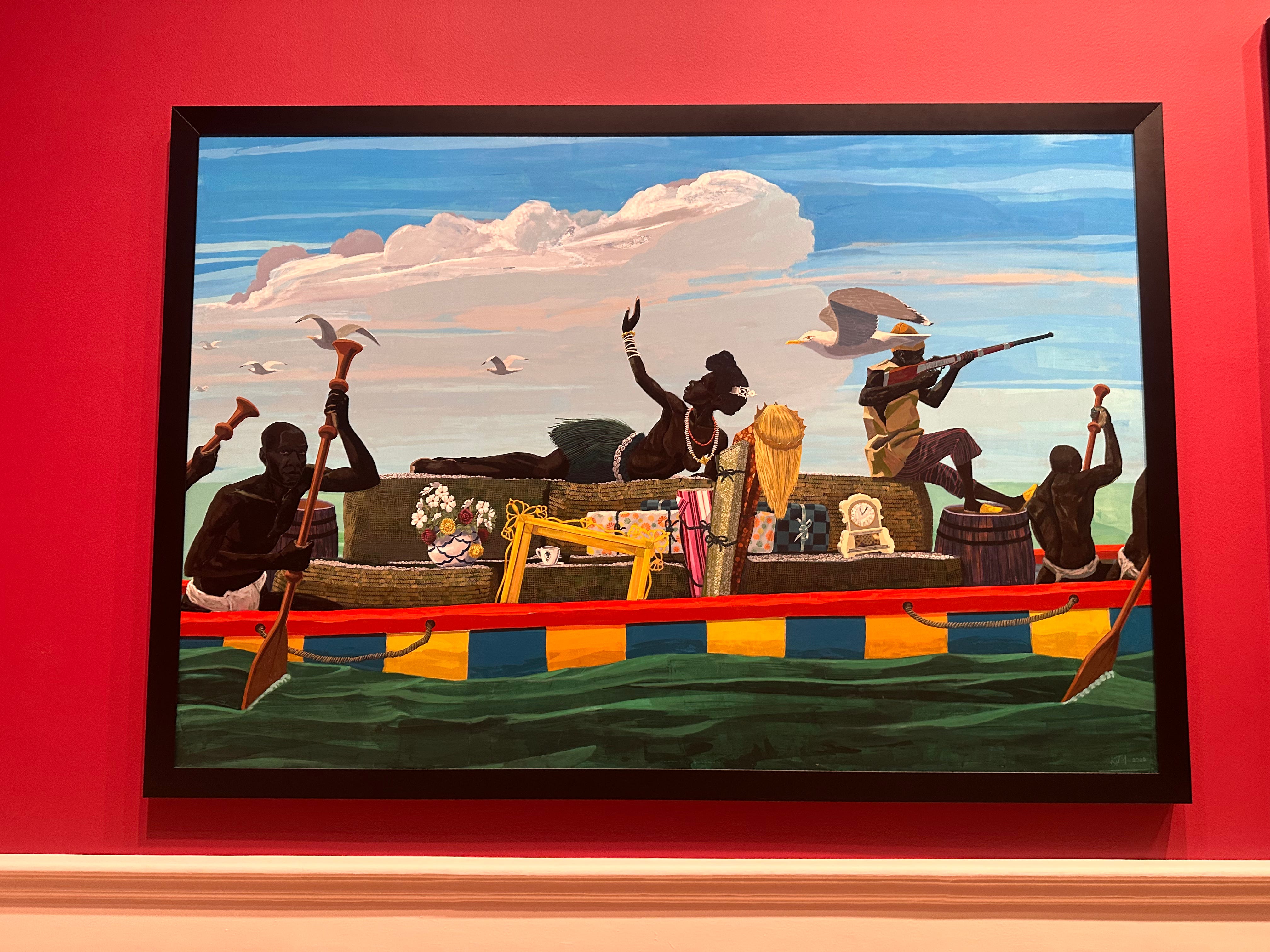
Most of the galleries were curated around past works, but the one gallery tackled a subject that deserves its own article. Titled, “Africa Revisited,” it depicted moments in African history that “are not often depicted” aka THE QUIET PART. Several of the paintings show vivid scenes of Africans kidnapping or selling their people into slavery in exchange for coveted European goods. In one pair of paintings I am still haunted by, one shows a canoe captained by an African kidnappaer with hostages being delivered to slavers out of scene; in the next painting the gleeful crew returns is shown returning to shore with all of finery and booty they got in exchange. Yiiiiiiiiiikes. This conversation is so radical and important, and it had the electricity you feel when you see family business being made public. A feeling we need much more of.
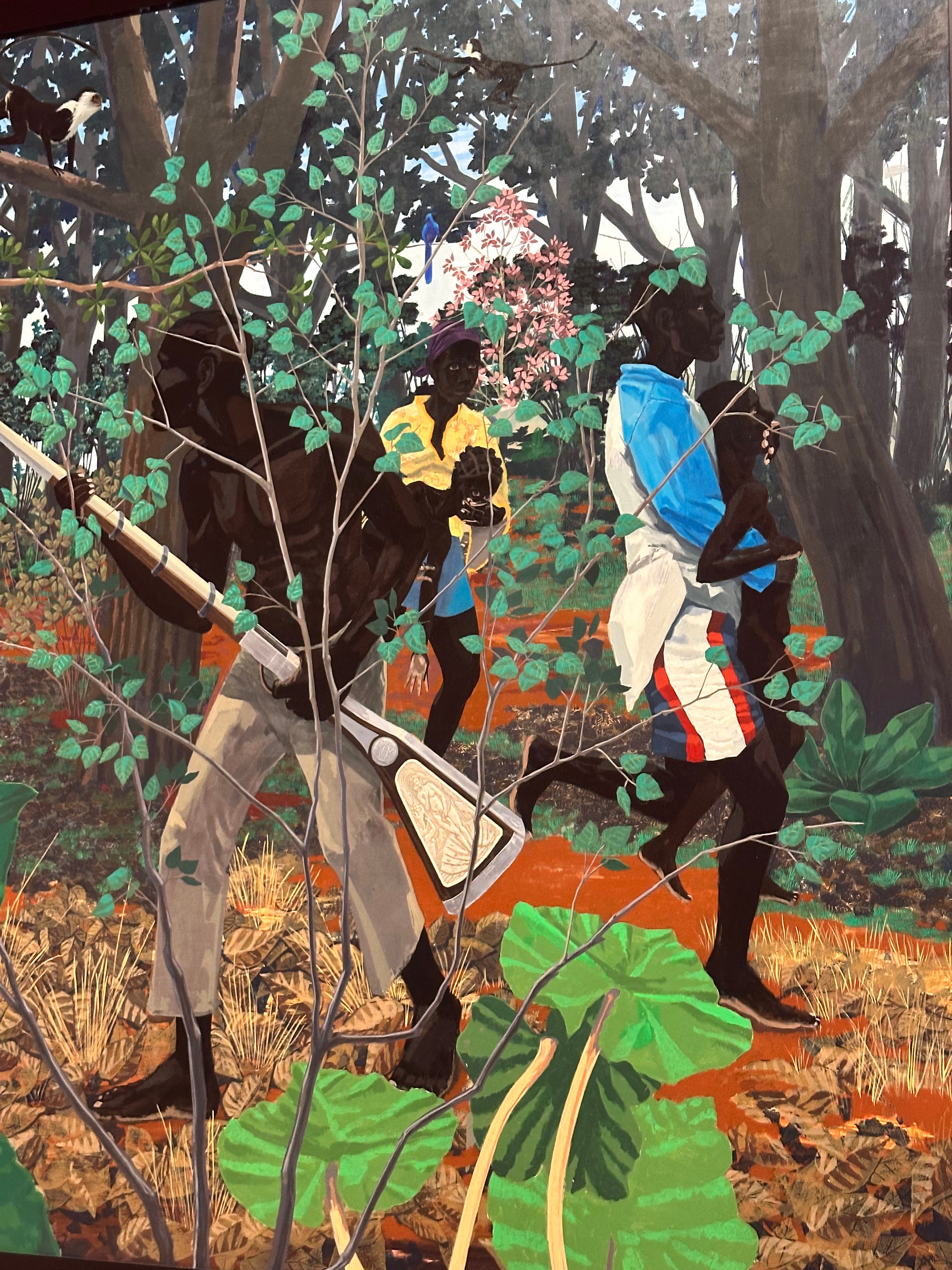
While the show is over, look for it to be restaged somewhere soon as I cannot imagine we’ve seen the last of this incredible showcase for one of our most vital living talents.
MONUMENTS, Various artists.
MOCA GEFFEN and The Brick in Los Angeles
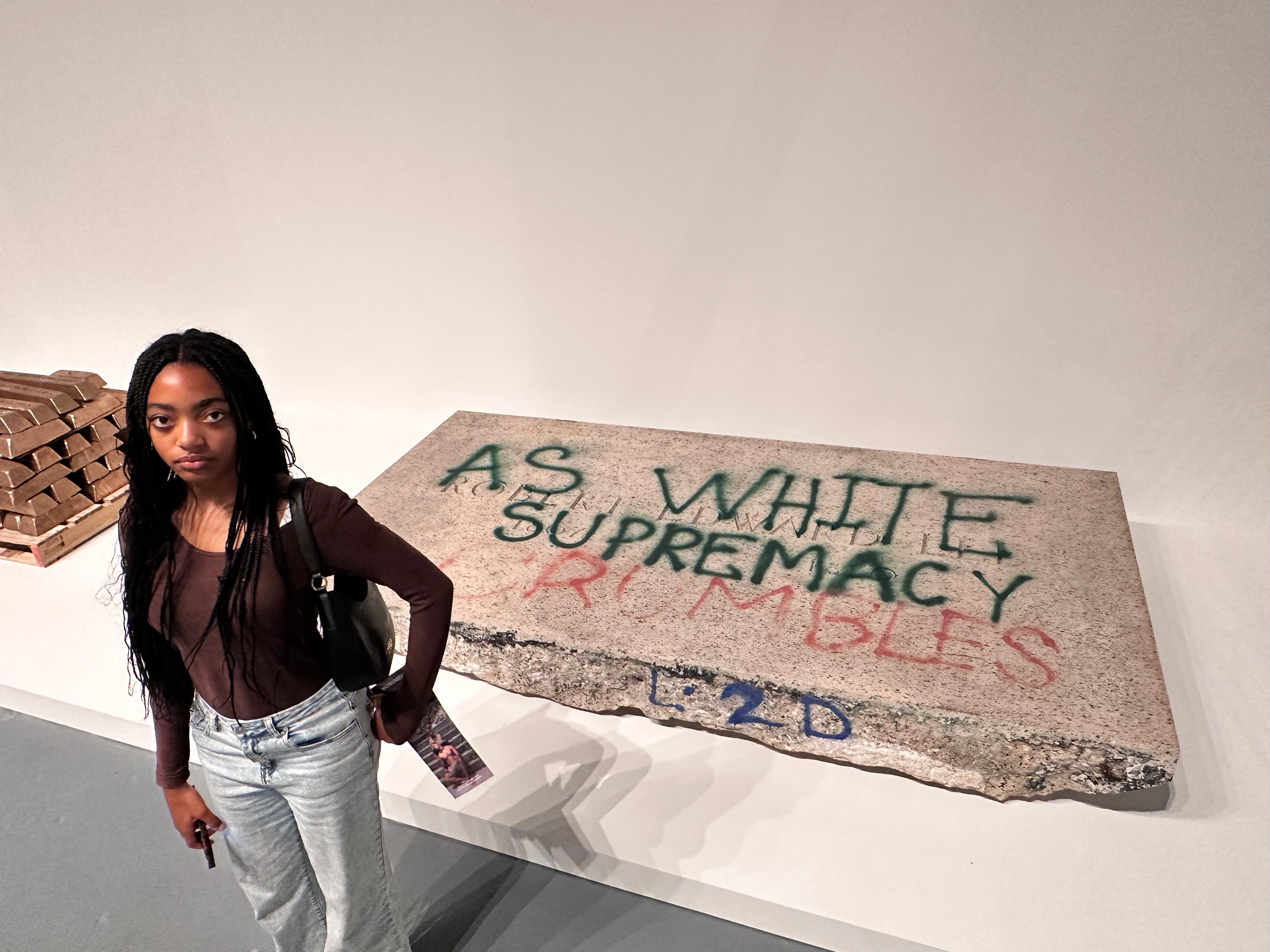
MONUMENTS is a very different show about American history taking place across two exhibition spaces in Los Angeles. At MOCA, decommissioned monuments, many of which honor “Lost Cause” figures, are placed throughout the museum removed from their pedestals and their reverent contexts. Artists were given access to the monuments to melt into ingots, carve into sculptures or incorporate into new works. Some are still pristine, with figures that seem unaware of their missing pedestals, while others are retain paint and graffiti from the protests that preceded their de-installation.


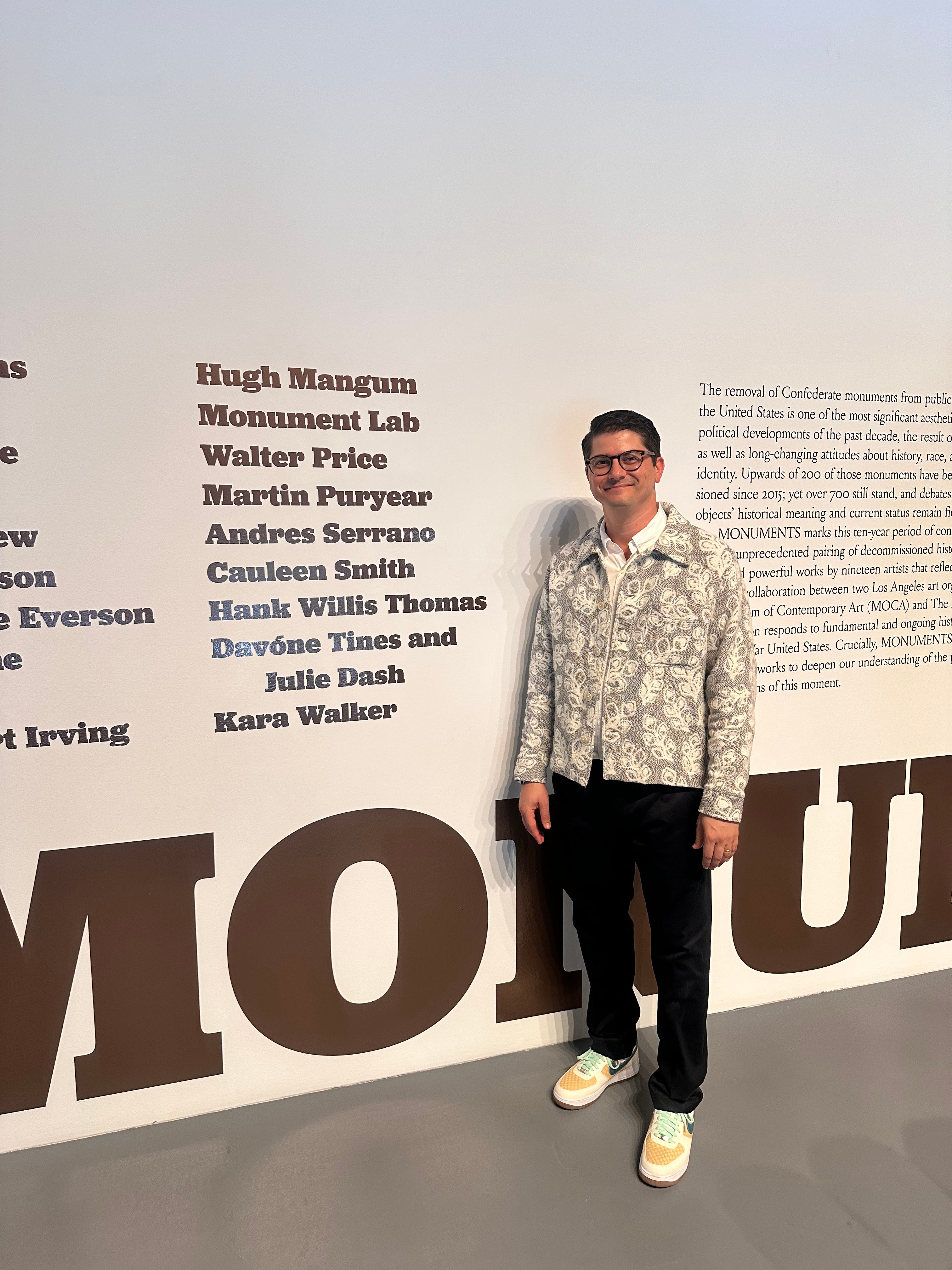
Aside these relics are contemporary works that grapple with who and what is celebrated in America and what is omitted. The show continues at The Brick where Kara Walker reverses Lost Cause hagiography by making a monster out of Stonewall Jackson. That statue, up for a century in Charlottesville, came down following the deadly nazi rally in 2017 after much public debate. The shows are a powerful and, in this era of obsequiousness, brave rebuke to those who would sanitize deplorable Americans and snuff out depictions of a truer, multicultural reflection of our shared heritage.
One of the most successful commissioned works in the show was produced by our friends at Monument Lab. Their work, a high-tech visualization of data from their groundbreaking Audit, tells a story of who and what this country has historically celebrated and who has been left out. Unsurprisingly, it is damning and depressing data, but seeing it laid out so clearly and engagingly is still moving. It also couldn’t be more timely as the landscape appears to be getting worse, not better.
Another standout is the short film, “Homegoing,” directed by Julie Dash. Ms. Dash, of Daughters of the Dusk renown, shot on location at Mother Emmanuel church to memorialize the parishioners slain there, and to commemorate the ten-year anniversary of the massacre. The film features a haunting, soaring rendition of, “Let it Shine,” by opera singer Davóne Tines which you can hear echoing throughout the museum. It is heartbreaking. At the opening Davóne was on hand to christen the space with the Black National Anthem and it was so powerful.
The show is up until May 3rd in both spaces, and it alone is a reason to come to Los Angeles.
Other Shows to Note:
Derek Fordjour’s Nightsong at David Kordansky (Concluded in October 2025). See my post here.
On View Now:
Tavares Strachan The Day Tomorrow Began at LACMA
Amoka Boafo Bring Home With Me at Roberts Projects LA